.png)


Early Signs of Dementia Families Often Mistake for Normal Aging
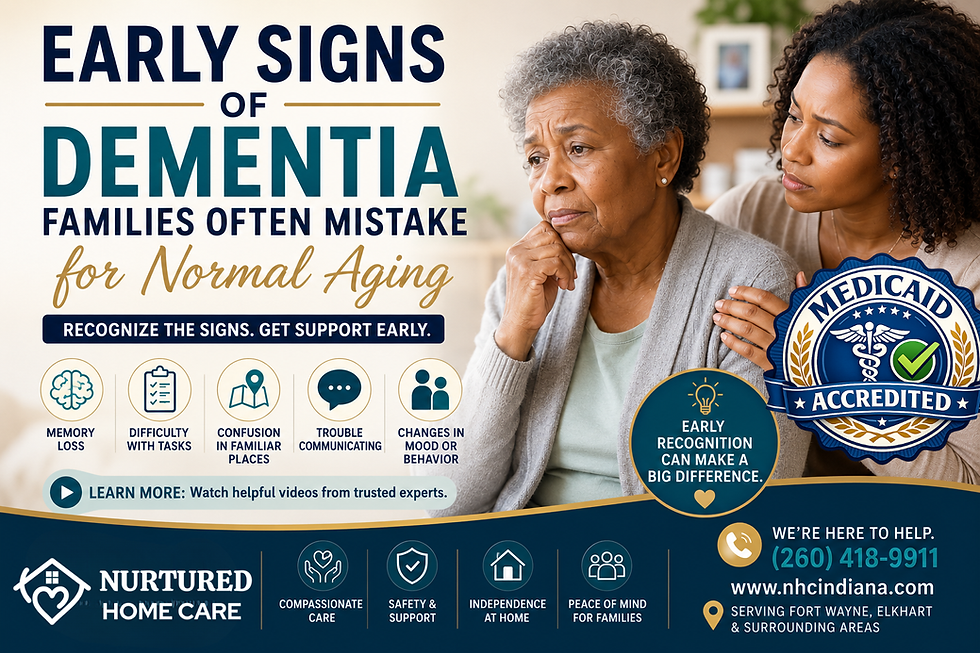
"She's just getting older... right?"
If you've ever found yourself saying this about a parent or loved one, you're not alone.
Occasionally forgetting where you left your keys or struggling to remember a name is a normal part of aging. But when memory problems begin affecting everyday life, they may be signs of something more serious.
Before you dismiss those changes as "just old age," take a few minutes to read this guide. Recognizing the early signs of dementia can help families seek the right support sooner, improve quality of life, and make informed decisions about future care.
As you read, ask yourself:
Has my loved one changed over the past year?
Are these small changes becoming more frequent?
Would I recognize the difference between normal aging and dementia?
Let's explore some of the early warning signs families often overlook.
What Is Dementia?
Dementia isn't a single disease—it's a term used to describe a group of symptoms that affect memory, thinking, reasoning, and the ability to perform everyday activities.
According to the Alzheimer's Association, dementia is caused by changes in the brain that interfere with daily life. Alzheimer's disease is the most common cause, but there are several other types of dementia.
The earlier dementia is recognized, the sooner families can access medical care, community resources, and support services.
1. Memory Loss That Disrupts Daily Life
Everyone forgets things occasionally.
But dementia-related memory loss is different.
Your loved one may:
Repeatedly ask the same questions
Forget recently learned information
Rely heavily on notes or family members
Forget important appointments
Ask yourself:
Is this happening once in a while—or almost every day?
2. Difficulty Completing Familiar Tasks
Someone living with early dementia may suddenly struggle with activities they've done for years.
Examples include:
Cooking familiar meals
Paying monthly bills
Following recipes
Using household appliances
Managing medications
If routine tasks become confusing, it's worth discussing these changes with a healthcare provider.
3. Getting Lost in Familiar Places
One of the more concerning warning signs is becoming disoriented in places that were once familiar.
Your loved one may:
Forget how to get home
Become confused while driving
Lose track of where they are
Wander unexpectedly
This isn't a typical part of healthy aging and should be evaluated.
4. Poor Judgment or Decision-Making
Changes in judgment may appear as:
Giving away large amounts of money
Falling for scams
Wearing inappropriate clothing for the weather
Ignoring personal hygiene
Making unsafe decisions at home
These behaviors may indicate changes in cognitive function rather than simple forgetfulness.
5. Changes in Mood or Personality
Dementia can affect emotions as well as memory.
You may notice your loved one becoming:
More anxious
Easily frustrated
Suspicious of others
Withdrawn from social activities
Less interested in hobbies they once enjoyed
Sometimes these emotional changes appear before noticeable memory problems.
6. Difficulty Finding the Right Words
Many people occasionally forget a word.
However, someone with dementia may:
Stop in the middle of conversations
Use unusual words for common objects
Repeat themselves frequently
Have trouble following conversations
Communication may gradually become more difficult over time.
7. Misplacing Things and Being Unable to Retrace Steps
Everyone misplaces belongings occasionally.
The difference is that individuals with dementia may place items in unusual locations—such as putting keys in the refrigerator—and be unable to retrace their steps to find them.
They may even believe someone else has taken the missing item.
8. Withdrawal From Family and Social Activities
Because memory problems can be embarrassing, some people begin avoiding social situations.
You might notice your loved one:
Declining invitations
Avoiding conversations
Losing interest in favorite hobbies
Spending more time alone
Social withdrawal can sometimes be one of the earliest noticeable changes.
When Is It Time to Seek Help?
If you've noticed several of these signs occurring consistently, don't ignore them.
Early evaluation doesn't necessarily mean your loved one has dementia—but it can help identify the cause of these changes and provide access to treatments, resources, and support if needed.
A healthcare provider can perform assessments and recommend the next steps.
How Home Care Can Help
Even in the early stages of dementia, home care can make a meaningful difference.
Professional caregivers can assist with:
Medication reminders
Meal preparation
Personal care
Daily routines
Transportation
Companionship
Safety monitoring
Receiving support early can help individuals maintain their independence while giving families valuable peace of mind.
Final Thoughts: Early Recognition Can Make a Meaningful Difference
Not every memory lapse is dementia, and not every change in behavior is cause for alarm. However, recognizing the difference between normal aging and symptoms that interfere with daily life can help families take action sooner rather than later.
If you've started noticing changes in your loved one, trust your instincts and talk with their healthcare provider. Early evaluation can provide answers, open the door to treatment and support, and help families plan with confidence.
At Nurtured Home Care Indiana, we're committed to helping families navigate every stage of the caregiving journey with compassion and personalized support. Whether your loved one has received a diagnosis or you're simply beginning to ask questions, we're here to help.
📍 Serving Fort Wayne, Elkhart, and surrounding areas📞 Call us today at (260) 418-9911🌐 www.nhcindiana.com
You don't have to navigate this journey alone. Compassionate care and trusted guidance are only a phone call away.
Learn More From Trusted Experts
If you'd like to learn more about dementia, these trusted organizations offer evidence-based information for families and caregivers.
📖 Alzheimer's Association
Learn about the warning signs of Alzheimer's disease, available resources, and caregiver support.https://www.alz.org/alzheimers-dementia/10_signs
📖 National Institute on Aging (NIA)
Explore trusted information on dementia symptoms, diagnosis, and healthy aging.https://www.nia.nih.gov/health/alzheimers-and-dementia
📖 Centers for Disease Control and Prevention (CDC)
Learn about cognitive health, dementia risk factors, and caregiving resources.https://www.cdc.gov/aging
🎥 Prefer Watching Instead of Reading?
These YouTube resources from healthcare organizations and dementia experts provide practical guidance for families.
▶ 10 Early Signs of Alzheimer's Disease (Alzheimer's Association)https://www.youtube.com/results?search_query=Alzheimer%27s+Association+10+Early+Signs+of+Alzheimer%27s+Disease
▶ Normal Aging vs. Dementia: What's the Difference?https://www.youtube.com/results?search_query=Normal+Aging+vs+Dementia
▶ How to Talk to a Parent About Memory Losshttps://www.youtube.com/results?search_query=How+to+Talk+to+an+Aging+Parent+About+Memory+Loss
▶ Understanding Dementia for Familieshttps://www.youtube.com/results?search_query=Understanding+Dementia+for+Families
💙 A Quick Reminder
Not every forgotten name or misplaced key means someone has dementia. But when memory loss begins to interfere with everyday life, paying attention to the signs can make all the difference.
The sooner families recognize changes, the sooner they can access the care, support, and resources their loved ones deserve.


Comments